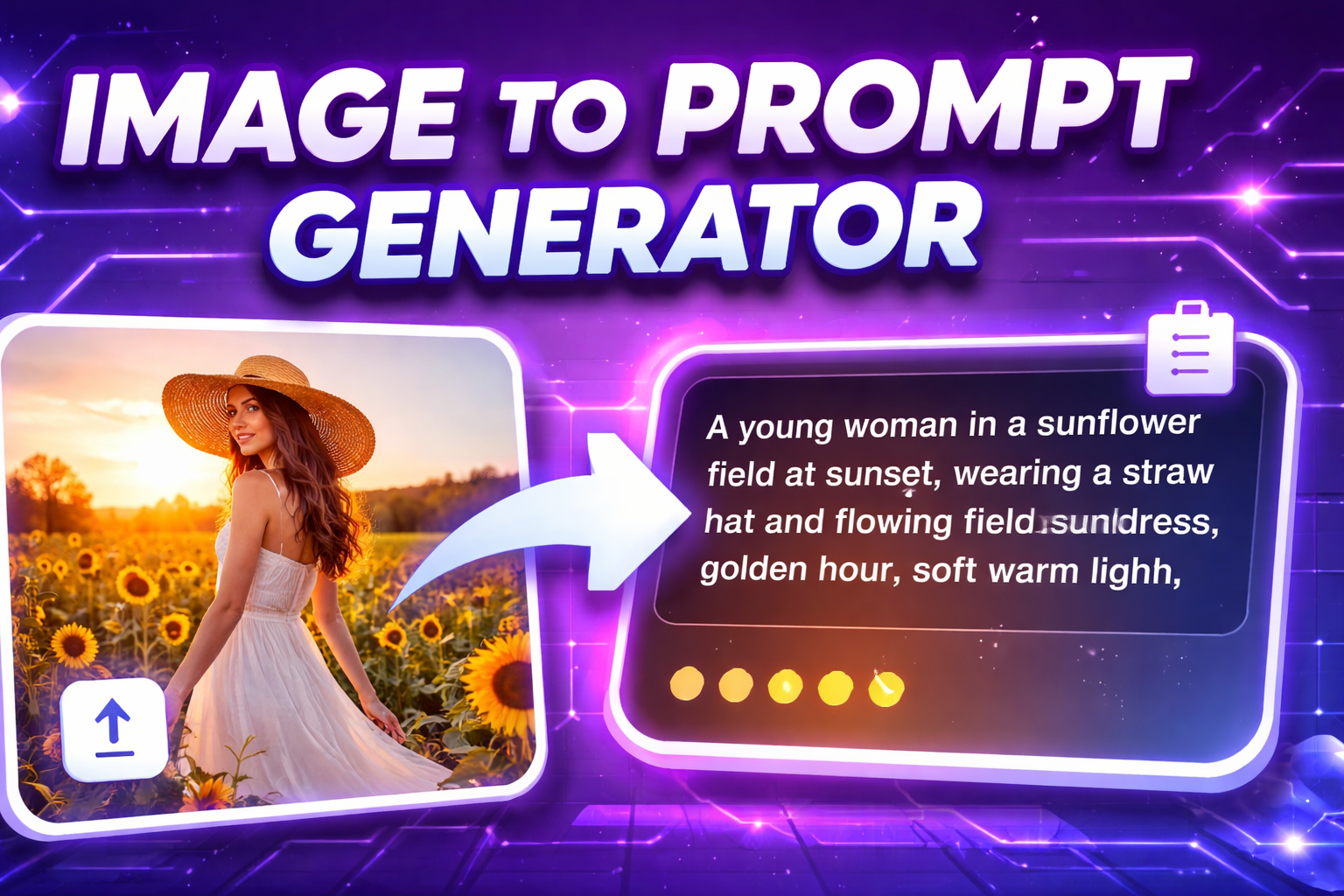
Image to Prompt is more than a simple conversion tool. For advanced creators, it becomes a complete workflow that connects visual references with structured prompt engineering. By using image to prompt, creators can transform images into reliable prompts that support consistent and high quality AI image generation.
Building a Structured Image to Prompt Workflow
An advanced workflow starts with clear visual intent. Creators select reference images that match the desired style, mood, and composition. These images act as a foundation for prompt generation rather than relying on imagination alone.
How Image to Prompt Analyzes Visual Data
When an image is uploaded, image to prompt systems analyze multiple visual layers. They identify the subject, artistic style, lighting conditions, color palette, and camera perspective. This detailed analysis allows creators to reuse prompts across different AI image generators with minimal adjustments.
Core Elements Advanced Creators Focus On
Advanced image to prompt workflows emphasize consistency and control. The following elements are critical:
- Primary subject and secondary details
- Artistic style such as realistic, cinematic, or illustrative
- Lighting setup including direction and intensity
- Color tone that defines the overall atmosphere
- Camera angle and depth of field
- Mood and emotional impact
Refining Prompts for Creative Control
After generating an initial prompt, advanced creators refine it. They adjust descriptive keywords, emphasize specific visual traits, and remove unnecessary details. This refinement process allows greater creative control while preserving the original visual identity.
Image to Prompt vs Traditional Prompt Iteration
Traditional prompt workflows rely heavily on trial and error. Image to prompt reduces this inefficiency by grounding prompts in real visual references. This leads to faster iteration cycles and more predictable AI generated results.
Who Benefits from an Advanced Workflow
Advanced image to prompt workflows are ideal for professional creators, including designers, illustrators, marketers, and AI content producers. These users often need consistent visuals across campaigns, products, or creative projects.
Limitations and Considerations
While powerful, image to prompt workflows still depend on input quality. Low resolution images or unclear compositions may reduce accuracy. However, ongoing improvements in AI vision models continue to enhance prompt reliability and detail extraction.
The Future of Image to Prompt Workflows
Future image to prompt tools will offer deeper customization, better semantic understanding, and seamless integration with AI image platforms. These advancements will make advanced workflows more accessible to creators at every skill level.
An advanced image to prompt workflow transforms AI image creation into a structured and repeatable process. By combining strong visual references with prompt refinement, creators can achieve consistent, high quality, and visually compelling AI generated images.
Frequently Asked Questions
What is an advanced image to prompt workflow?
It is a structured process that uses visual references and refined prompts for consistent AI image generation.
How is this different from basic prompt generation?
Advanced workflows focus on consistency, refinement, and reuse rather than one time prompts.
Do I need professional experience to use image to prompt?
No, but advanced workflows are especially useful for experienced creators.
Can one image support multiple creative outputs?
Yes, a single image based prompt can be refined to generate many variations.
Does image quality affect workflow results?
Higher quality images produce more accurate and detailed prompts.
Is image to prompt useful for commercial projects?
Yes, it is widely used in branding, marketing, and professional design workflows.
Where can creators use image to prompt tools?
Creators can use image to prompt technology at img2prompt.my.id.