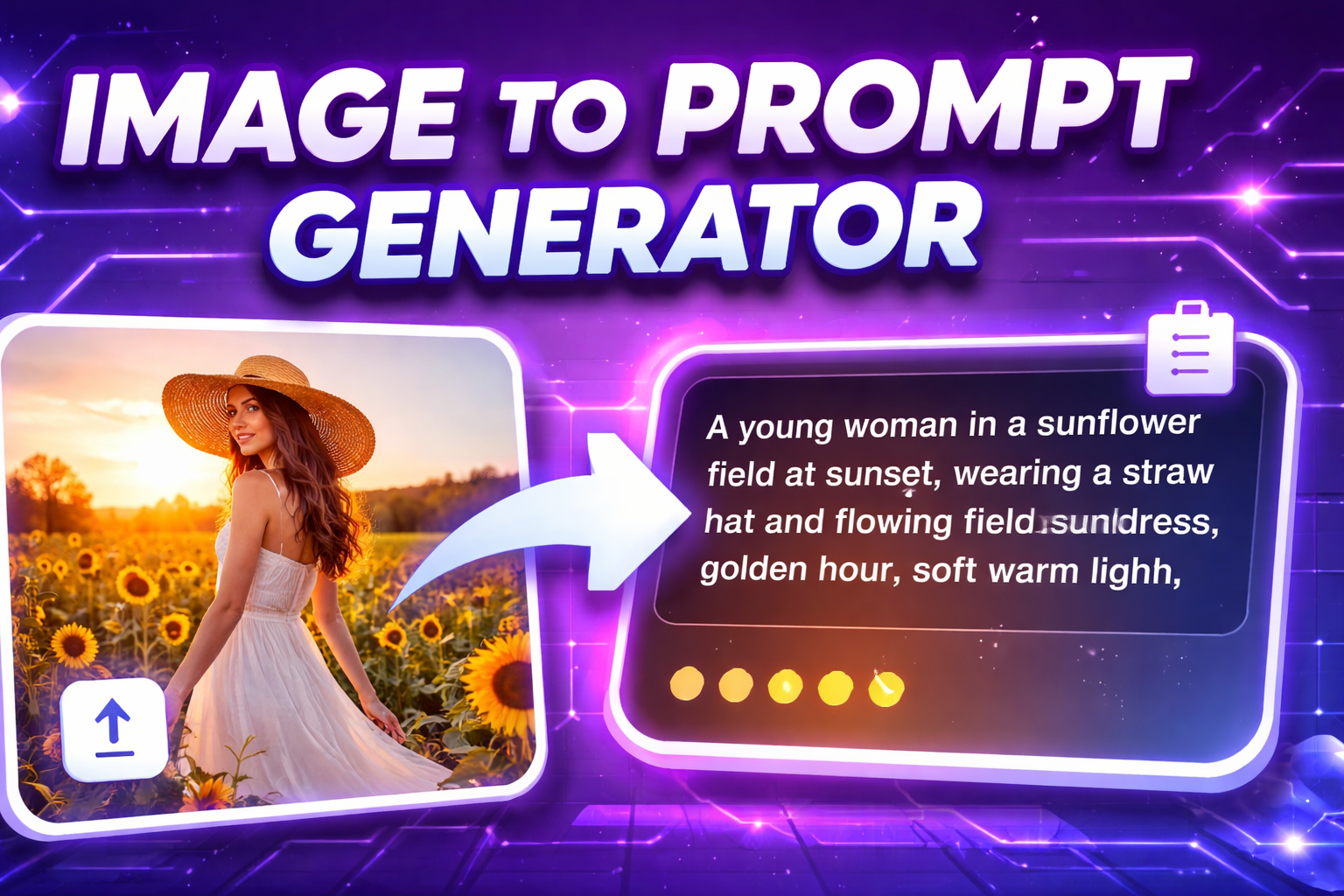
Artificial intelligence is no longer limited to recognizing objects. Modern AI systems can understand visual style and aesthetics by analyzing patterns, colors, lighting, and composition. Through image to prompt, these visual insights can be translated into structured prompts for AI image generation.
How AI Interprets Visual Information
AI models process images by breaking them down into measurable visual features. These include shapes, textures, color distribution, and spatial relationships. By combining millions of learned patterns, AI begins to associate visual elements with recognizable styles and aesthetic qualities.
Understanding Visual Style in AI Systems
Visual style refers to the overall artistic appearance of an image. AI identifies style by examining brush patterns, contrast levels, color palettes, and rendering techniques. This allows AI to distinguish between photorealistic images, illustrations, cinematic scenes, and digital art.
The Role of Aesthetics in Image Analysis
Aesthetics involve subjective qualities such as beauty, mood, and emotional tone. AI estimates aesthetics by evaluating balance, harmony, lighting softness, and visual clarity. These factors help determine whether an image feels calm, dramatic, vibrant, or minimal.
How Image to Prompt Captures Style and Mood
Image to prompt technology connects AI visual understanding with prompt engineering. By analyzing style and aesthetics from an image, the system generates prompts that include mood descriptors, lighting conditions, and stylistic cues. This makes it easier to recreate a similar visual outcome using AI generators.
Key Visual Elements AI Uses to Define Aesthetics
- Color harmony and dominant color schemes
- Lighting quality such as soft, natural, or dramatic light
- Texture and surface detail
- Composition and subject placement
- Contrast between light and shadow
- Emotional tone conveyed by the scene
Why Visual Understanding Matters for AI Prompts
When AI understands visual style and aesthetics, prompts become more descriptive and precise. Instead of generic instructions, creators can rely on image based references to guide AI toward consistent and realistic outputs. This approach significantly improves prompt accuracy.
Practical Benefits of Image to Prompt for Creators
Designers, artists, and content creators benefit from image to prompt because it reduces trial and error. By starting from a visual reference, creators can quickly generate prompts that align with a desired aesthetic and visual identity.
The Future of AI Visual Style Understanding
As AI models evolve, their ability to understand subtle aesthetic details will continue to improve. Future image to prompt systems are expected to capture deeper artistic intent, making AI generated visuals even more refined and expressive.
AI understands visual style and aesthetics by analyzing patterns, colors, lighting, and composition. With the help of image to prompt technology, this understanding can be transformed into effective prompts that unlock more realistic and visually appealing AI generated images.
Frequently Asked Questions
How does AI recognize visual style?
AI recognizes visual style by analyzing patterns, textures, colors, and rendering techniques.
What does aesthetics mean in AI image analysis?
Aesthetics refer to mood, balance, harmony, and emotional tone within an image.
Can AI understand artistic intent?
AI estimates artistic intent by learning visual patterns from large datasets, though it does not think creatively like humans.
What is image to prompt?
Image to prompt converts visual information from an image into a structured text prompt.
Does image quality affect AI style recognition?
Yes, higher quality images provide clearer visual data and improve style detection.
Who benefits most from image to prompt tools?
Artists, designers, marketers, and AI content creators benefit the most.
Where can I use image to prompt technology?
You can use image to prompt tools at img2prompt.my.id.