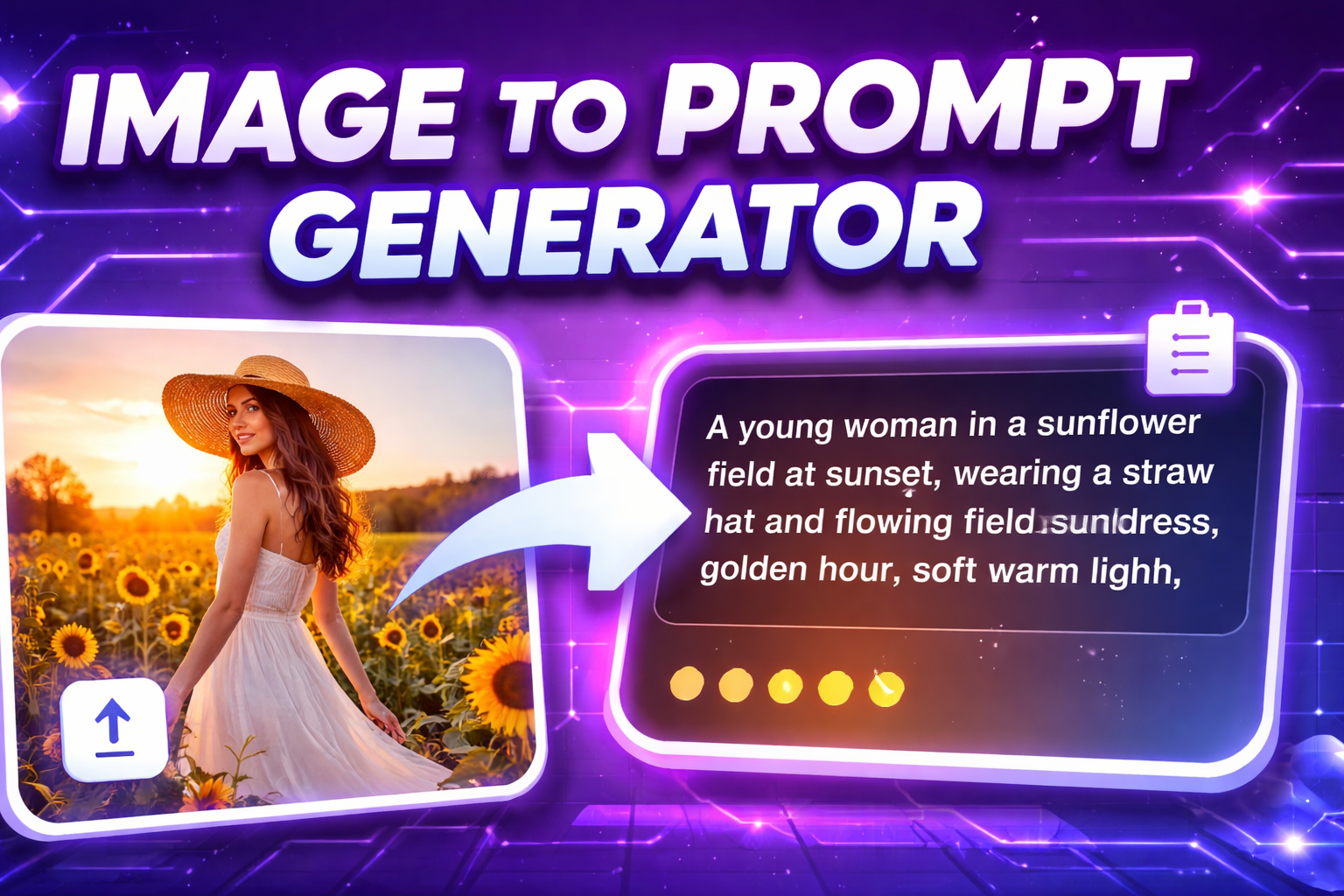
Image to Prompt is a technique that converts an image into a structured text prompt that can be reused for AI image generation. One of the most important visual elements analyzed by image to prompt systems is camera angle, which directly influences composition, perspective, and emotional impact.
Why Camera Angles Matter in AI Image Generation
Camera angles define how a subject is viewed within a frame. A low angle can make a subject appear powerful, while a high angle can suggest vulnerability. When AI generates images, accurately understanding camera perspective helps preserve the original intent of a reference image.
How Image to Prompt Detects Camera Perspective
Image to Prompt tools analyze spatial relationships, depth cues, and framing. By using image to prompt technology, AI can identify whether an image uses a close-up, wide shot, eye-level view, or angled perspective, then convert this information into descriptive prompt language.
Common Camera Angles Used in AI Prompts
- Eye-Level perspective that feels natural and balanced
- Low Angle view that emphasizes scale and dominance
- High Angle framing that creates a sense of distance or vulnerability
- Close-Up shots that highlight detail and emotion
- Wide Shot compositions that establish environment and context
Impact of Camera Angles on Prompt Accuracy
Ignoring camera angle often results in AI images that feel off or poorly composed. When prompts include clear perspective cues, AI models generate visuals that better match the reference image. This is one reason image-based prompting tends to outperform text-only descriptions.
Image to Prompt vs Manual Angle Description
Manually describing camera angles requires technical knowledge and precise wording. Image to Prompt automates this process by extracting perspective directly from images, making it easier to achieve consistent framing and composition across generated results.
Who Benefits from Camera Angle Awareness
Artists, designers, photographers, and marketers benefit from understanding how camera angles influence AI prompts. Using image to prompt workflows allows these users to maintain visual storytelling consistency with less manual effort.
Limitations of Camera Angle Detection
While AI is effective at detecting basic perspectives, complex or abstract compositions may still require manual prompt refinement. Image quality and clarity also play a significant role in detection accuracy.
Frequently Asked Questions
What is a camera angle in AI image prompts?
It describes the perspective from which the subject is viewed, such as high angle or close-up.
Why are camera angles important for AI images?
They affect composition, mood, and how the subject is perceived.
Can Image to Prompt automatically detect camera angles?
Yes, it analyzes visual cues to identify perspective and framing.
Do camera angles improve prompt accuracy?
Yes, including perspective details leads to more accurate AI-generated images.
Is image to prompt better than text prompts for perspective?
It is generally more reliable because it extracts perspective directly from visuals.
What images work best for camera angle detection?
Clear images with strong depth and framing cues produce the best results.
Can beginners use image to prompt tools effectively?
Yes, they simplify technical aspects like camera perspective.
Camera angles play a vital role in how AI interprets and generates images. By using image to prompt tools that accurately extract perspective, creators can produce more consistent, expressive, and visually compelling AI-generated images.