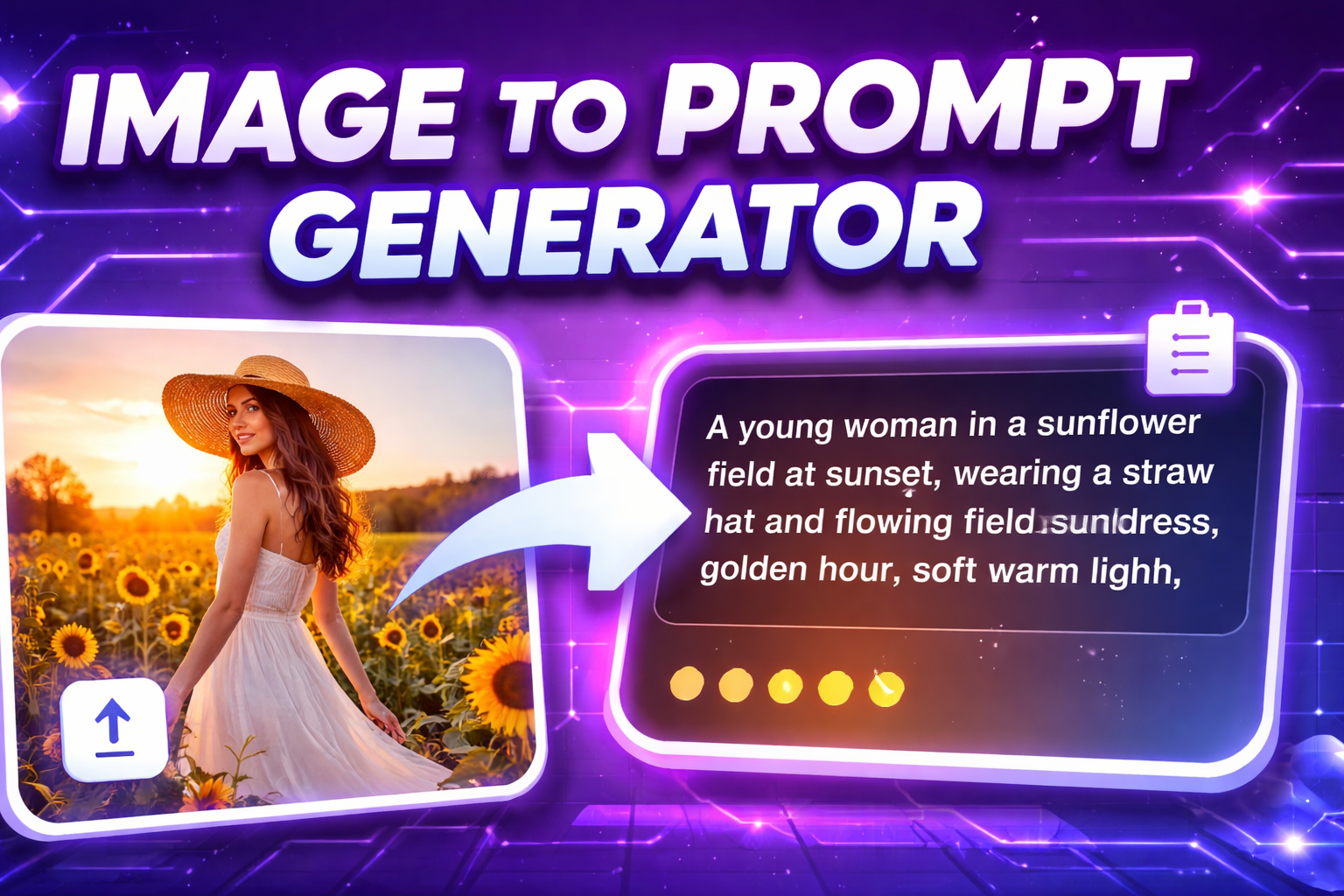
Lighting and composition are two of the most influential visual factors in AI prompt generation. When an AI analyzes an image, it relies heavily on how light interacts with the subject and how elements are arranged within the frame to determine mood, depth, and visual emphasis.
The Role of Lighting in AI Prompt Generation
Lighting defines the atmosphere of an image. AI models detect brightness levels, shadow placement, contrast, and light direction to infer whether a scene is dramatic, soft, cinematic, or natural. These lighting cues are then translated into descriptive prompt terms that strongly influence the final generated image.
How Composition Influences AI Understanding
Composition refers to how visual elements are positioned within an image. AI analyzes framing, balance, symmetry, and subject placement to understand focus and hierarchy. Well-defined composition helps AI generate prompts that preserve perspective and visual storytelling.
Key Lighting and Composition Elements Extracted
During image analysis, AI typically extracts the following elements:
- Light Source – natural, studio, backlight, or ambient lighting
- Shadow Depth – soft shadows or high-contrast lighting
- Framing – close-up, medium shot, or wide composition
- Subject Position – centered, off-center, or rule-of-thirds
- Visual Balance – symmetry versus asymmetry
Why Lighting and Composition Matter for Prompt Accuracy
Accurate lighting and composition descriptions help AI recreate the intended mood and focus of an image. Without these details, generated prompts may produce flat, inconsistent, or visually confusing results.
Lighting and Composition vs Text-Only Prompts
Text-only prompts require users to manually specify lighting and composition details. Image-based prompts extract these details automatically, reducing ambiguity and improving consistency across generated outputs.
Who Benefits from Understanding Lighting and Composition
Digital artists, photographers, designers, and AI prompt engineers benefit greatly from understanding how lighting and composition influence AI prompts. This knowledge leads to better creative control and more predictable results.
Limitations in AI Interpretation of Lighting and Composition
AI may sometimes misinterpret complex lighting setups or abstract compositions. Image clarity and resolution significantly impact how accurately these elements are translated into prompts.
The Future of Lighting-Aware Prompt Generation
Future AI models will offer more precise lighting and composition analysis, enabling creators to generate prompts that better capture cinematic and professional visual styles.
Lighting and composition are foundational to effective AI prompt generation. By understanding how these elements influence prompts, creators can produce more accurate, expressive, and visually compelling AI-generated images.